Manual Research vs. AI-Assisted Opportunity Analysis: Which Approach Fits Your Growth Strategy?
Every business owner wants to find the next big opportunity. The challenge is deciding where to look. Some teams spend hours combing through spreadsheets, local directories, and competitor websites. Others rely on software that scans data and surfaces patterns automatically. Both approaches have their place, but which one actually works better depends on your resources, your market, and the kind of insight you need.
Customer acquisition software has changed the way companies think about growth. Instead of guessing which channels to invest in, businesses can now use data to guide their decisions. But not everyone is ready to hand over the reins to an algorithm. Manual research still has a strong following, especially among small teams that trust their own instincts. The real question is not which method is superior. It is about understanding the trade-offs and knowing when to use each.
What Manual Research Looks Like Today
Manual research means doing the legwork yourself. You open a browser, search for keywords related to your industry, and note which companies appear. You visit their websites, read their content, and try to understand their pricing. You might sign up for their newsletters or follow them on social media to see how they engage with customers. This process gives you a firsthand feel for the competitive landscape.
Many business owners start this way because it costs nothing but time. You can tailor your research to exactly the questions you have. If you want to know which local competitors are running seasonal promotions, you can find that out in an afternoon. If you are curious about customer reviews on a specific platform, you can read them one by one. Manual research offers that direct connection to the source.
But there is a downside. Manual research scales poorly. As your market grows or as you expand into new locations, the amount of data to sift through becomes overwhelming. You might miss important shifts simply because you cannot look everywhere at once. And human bias creeps in easily. You tend to notice what confirms your existing beliefs and overlook signals that challenge them. That blind spot can lead to missed opportunities or, worse, investments in the wrong direction.
The Case for AI-Assisted Analysis
AI-assisted analysis uses algorithms to process large volumes of data quickly. Instead of reading hundreds of competitor pages, the software ingests them and highlights patterns. It can track changes in competitor activity, monitor local search trends, and even score opportunities based on customer intent. The goal is to reduce the time you spend gathering data so you can focus on interpreting it.
One practical advantage is speed. A tool that runs on a market intelligence engine can scan thousands of signals in minutes. It can tell you which customer segments are growing, which keywords are rising in popularity, and where your competitors are gaining traction. For a business that operates across multiple locations, this kind of overview is nearly impossible to get manually.
Another benefit is objectivity. Algorithms do not have a favorite competitor or a preferred market. They look at the data and report what is there. This can reveal market gaps that you would not have noticed on your own. For example, a tool might flag that a particular customer segment in a certain region has high search volume but very few providers addressing it. That is a direct lead for your growth priorities.
However, AI-assisted analysis is not perfect. It depends on the quality of the data it ingests. If the underlying sources are incomplete or biased, the output will be too. And while the software can identify patterns, it cannot always explain why those patterns exist. That context often comes from human judgment. A market intelligence engine might show that demand for a service is rising in a specific city, but it takes a person to understand that a new highway or a local festival is driving that interest.
Where Manual Research Shines
Manual research excels in situations that require deep, qualitative understanding. If you are entering a niche market with only a few competitors, you might learn more by talking to potential customers directly than by running a broad data scan. Manual research also works well for early-stage validation. Before you invest in expensive software, you can test your assumptions with a small sample of real conversations.
Another area where manual research is valuable is in understanding brand sentiment. You can read customer reviews, forum discussions, and social media comments to get a sense of how people really feel. This kind of nuance is hard to capture in a score or a trend line. If your business relies heavily on reputation and trust, manual research gives you the texture you need.
But manual research is time-intensive. A thorough competitive analysis can take weeks. And if you are not systematic, you might end up with a biased sample. Small teams often struggle to keep up with the pace of change. By the time you finish your manual audit, the market may have shifted.
Where AI-Assisted Analysis Adds the Most Value
AI-assisted analysis becomes essential when you are dealing with scale. If you have multiple locations, dozens of competitors, or a broad range of customer segments, manual methods will not keep up. The software can continuously monitor the landscape and alert you to changes. That real-time awareness is a significant advantage for companies that need to act quickly.

It also helps with opportunity scoring. Instead of chasing every lead, you can prioritize based on data. The software might rank opportunities by estimated demand, competitive intensity, and alignment with your strengths. That saves you from spreading your resources too thin.
For businesses that already use customer acquisition software, the integration of a market intelligence engine can make the difference between reactive and proactive growth. You are not just responding to what competitors do. You are anticipating where the market is heading.
Combining Both Approaches
The most effective strategy often blends manual and AI-assisted research. You use the software to identify the broad trends and surface the most promising opportunities. Then you apply manual research to validate those findings and add context. For example, the software might flag a rising keyword in a new customer segment. You then manually investigate a few top-ranking pages to understand why that segment is interested and what kind of content they respond to.
This hybrid approach reduces the risk of both blind spots. The algorithm catches what you might miss, and your human judgment filters out noise. It also makes efficient use of your time. You spend your energy on interpretation and decision-making, not on data collection.
Practical Steps to Get Started
- Define your research goal first. Are you looking for new markets, evaluating competitors, or testing a product idea? The goal determines which approach works best.
- Start with a small manual audit of your top three competitors. Note their messaging, pricing, and customer reviews. This gives you a baseline.
- If you are considering AI-assisted tools, look for ones that align with your specific needs. Do you need local search insights, competitor tracking, or customer intent data? Choose accordingly.
- Run a pilot. Use the software for a month on one market or segment. Compare what it surfaces against your manual findings. That comparison will show you where each method adds value.
- Iterate. As your business grows, revisit your research process. What worked when you had one location may not work when you have ten.
When to Stick With Manual Research
Manual research is still the right choice if you have a very small budget and a very focused market. If you are a local service provider with only a handful of competitors, you can learn everything you need by spending a few hours online and talking to customers. Similarly, if you are in a highly specialized niche where data sources are sparse, automation may not help. Your own expertise becomes your biggest asset.
Manual research also makes sense when you are building a new business category. There are no existing benchmarks to track. You are creating the market, so your research is more about listening and experimenting than about analyzing established patterns.
When to Invest in AI-Assisted Analysis
If you are scaling across multiple locations or targeting multiple customer segments, the manual approach will eventually hit a wall. The volume of data becomes unmanageable, and your response times slow down. That is the moment to invest in AI-assisted analysis. It is also worth considering if your competitors are already using similar tools. If they are moving faster than you, the gap will only widen.
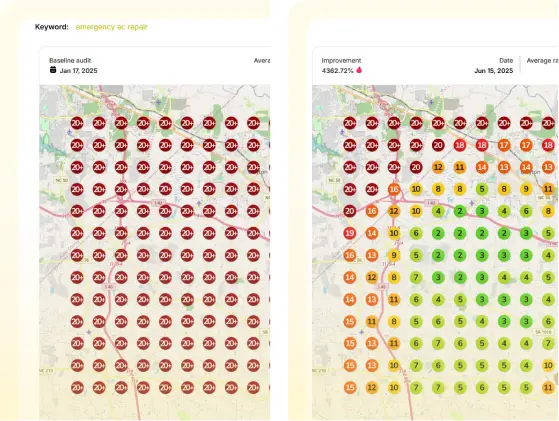
Another sign is when you find yourself making decisions based on old data. If your last competitive analysis is six months old, you are operating on assumptions that may no longer hold. Automated tools keep you current, which is critical in fast-moving markets.
Making Your Choice
There is no universal answer. The right approach depends on your specific situation. A small local business with a loyal customer base may never need sophisticated software. A growing company with ambitions to expand into new regions will likely benefit from automation. The key is to be honest about your resources and your goals.
Whichever path you choose, the goal remains the same: to find opportunities that others have missed. Whether you find them through your own research or through a market intelligence engine, the insight is what matters. The best approach is the one that gives you the clearest picture of your market so you can act with confidence.